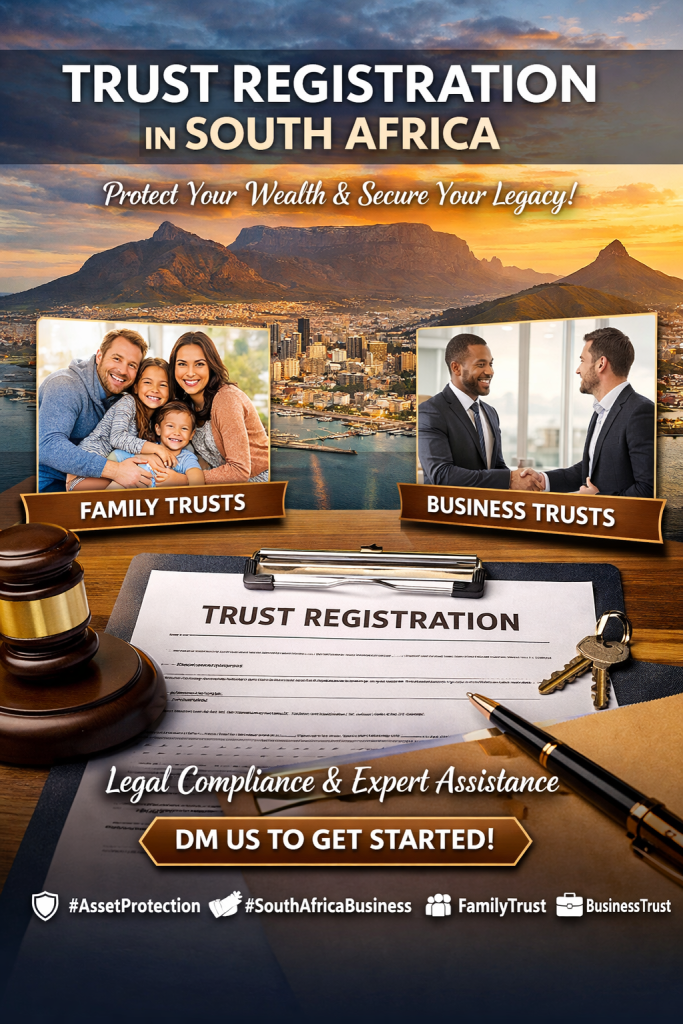
How to Register a Trust in South Africa (Complete 2025 Guide)
Registering a trust in South Africa is a smart way to protect assets, manage wealth, and plan for future generations. Whether you want to set up a family trust, business trust, or special trust, understanding the legal process is essential to ensure compliance with South African law.
This guide explains how to register a trust in South Africa, the different trust types, requirements, costs, and common mistakes to avoid.
What Is a Trust in South Africa?
A trust is a legal structure where a founder (donor) transfers assets to trustees, who manage them for the benefit of beneficiaries. Trusts are governed by the Trust Property Control Act, 57 of 1988 and must be registered with the Master of the High Court.
Types of Trusts in South Africa
Choosing the correct trust type is important for tax, control, and asset protection purposes.
1. Family Trust
Used for estate planning and protecting family assets such as property and investments.
2. Business Trust
Often used to operate a business or hold business assets separately from personal ownership.
3. Special Trust
Includes trusts for minors or persons with disabilities and may qualify for special tax treatment.
Requirements to Register a Trust in South Africa
To register a trust, you will need:
- Trust name (three name options recommended)
- Trust Deed (legally drafted)
- Founder’s certified ID
- Trustees’ certified IDs
- Beneficiaries’ details
- Proof of address for trustees
- Letters of Authority application
- Acceptance of trusteeship forms
⚠️ Important: Trustees may not act until Letters of Authority are issued by the Master of the High Court.
Step-by-Step Process to Register a Trust
Step 1: Draft the Trust Deed
The trust deed outlines how the trust will operate, including trustee powers and beneficiary rights.
Step 2: Appoint Trustees
At least one independent trustee is recommended to meet compliance and banking requirements.
Step 3: Submit Documents to the Master of the High Court
Documents are submitted either online (where available) or manually to the relevant Master’s Office.
Step 4: Receive Letters of Authority
Once approved, the Master issues Letters of Authority, officially activating the trust.
How Long Does Trust Registration Take?
- Processing time: 2–6 weeks
- Timeframes may vary depending on the Master’s Office and document accuracy
Cost to Register a Trust in South Africa
Costs typically include:
- Trust deed drafting
- Registration handling
- Independent trustee appointment (if required)
💡 Professional trust registration services help avoid delays, rejections, and compliance issues.
Tax Registration After Trust Registration
Once registered, the trust must be:
- Registered with SARS for income tax
- Registered for PAYE or VAT if applicable
- Compliant with annual tax submissions
Trusts are taxed differently from individuals, making professional guidance highly recommended.
Common Mistakes to Avoid
- Using a generic or incorrect trust deed
- Appointing non-compliant trustees
- Acting without Letters of Authority
- Poor tax planning
- Failing to keep trust records updated
Benefits of Registering a Trust
- Asset protection
- Estate planning advantages
- Continuity beyond death
- Controlled distribution of wealth
- Legal separation of assets
Do You Need Help Registering a Trust in South Africa?
Professional assistance ensures your trust is legally compliant, properly structured, and registered without unnecessary delays. A correctly registered trust provides long-term protection and peace of mind.
Contact us today for assistance.