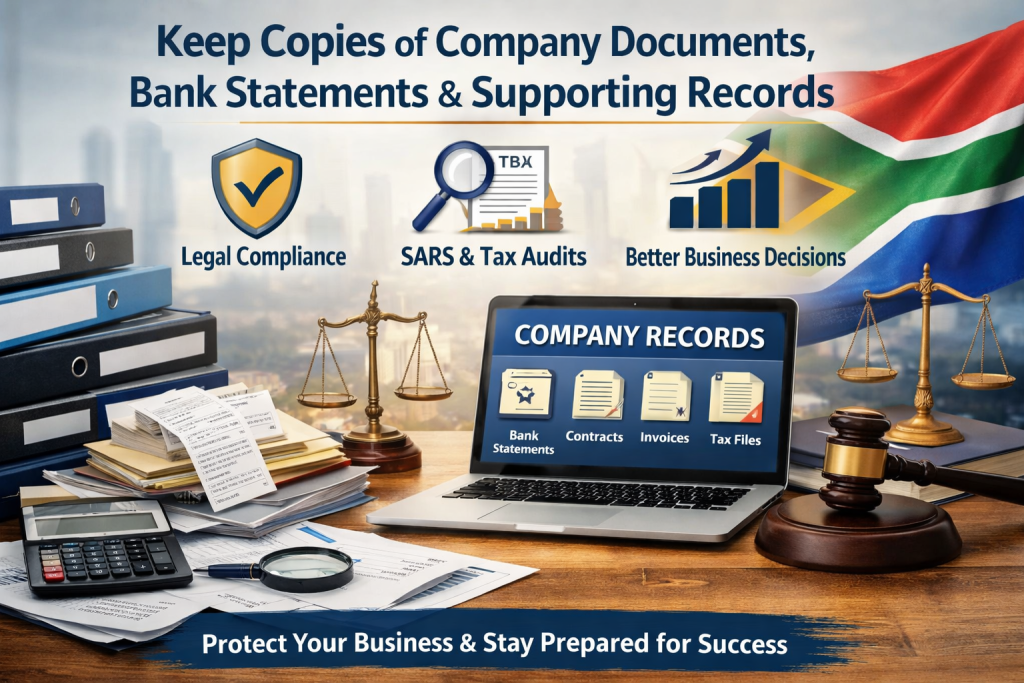
Why Every South African Business Must Keep Copies of Company Documents, Bank Statements & Supporting Records
In the dynamic world of running a business in South Africa, keeping accurate and accessible records isn’t just good practice — it’s a legal requirement and a foundation for long-term success. From registration documents and bank statements to invoices and receipts, properly storing key documentation protects your business, ensures compliance with regulatory bodies like CIPC and SARS, and helps you make smarter decisions.
1. Legal Compliance — Protect Your Business from Penalties
Under the Companies Act (No. 71 of 2008), companies must keep certain records — such as their memorandum of incorporation, financial statements, accounting records, and meeting minutes — for at least seven years or longer where required by law. Failing to retain these documents can lead to non-compliance findings, penalties, frozen accounts, or even deregistration of your business.
2. Tax Audits & SARS Inspections — Be Ready When They Come
SARS requires businesses to maintain complete financial records — including bank statements, invoices, receipts, and supporting documents — so that every entry in your tax return can be verified. Without supporting evidence, SARS may question your figures, disallow deductions, or impose penalties — even if your return is otherwise accurate.
3. Peace of Mind During Financial Audits
Whether you’re preparing for an external audit or conducting an internal review, having copies of all key records — like reconciled bank statements and transaction proofs — makes the process efficient and stress-free. These documents act as vouchers that substantiate entries in your books.
4. Smooth Banking & Funding Processes
When you open business bank accounts, apply for loans, or work with investors and clients, you’ll be asked for official company documents and financial records. Keeping organised copies means you can respond quickly and professionally — without scrambling for paperwork.
5. Better Business Management & Decision-Making
Accurate records aren’t only about meeting legal requirements — they’re a decision-making tool. Your financial history provides insights into cash flow, expenses, and opportunities for growth. Well-kept bank statements and supporting documents help you budget, forecast, and avoid costly mistakes.
Best Practices for Record Keeping
✔ Keep both physical and digital copies of all documents.
✔ Organise files by year and category (e.g., bank statements, invoices, tax returns).
✔ Back up files securely using cloud storage or encrypted drives.
By maintaining a clear, organised, and accessible filing system, you not only comply with South African business laws — you empower your business to grow with confidence.