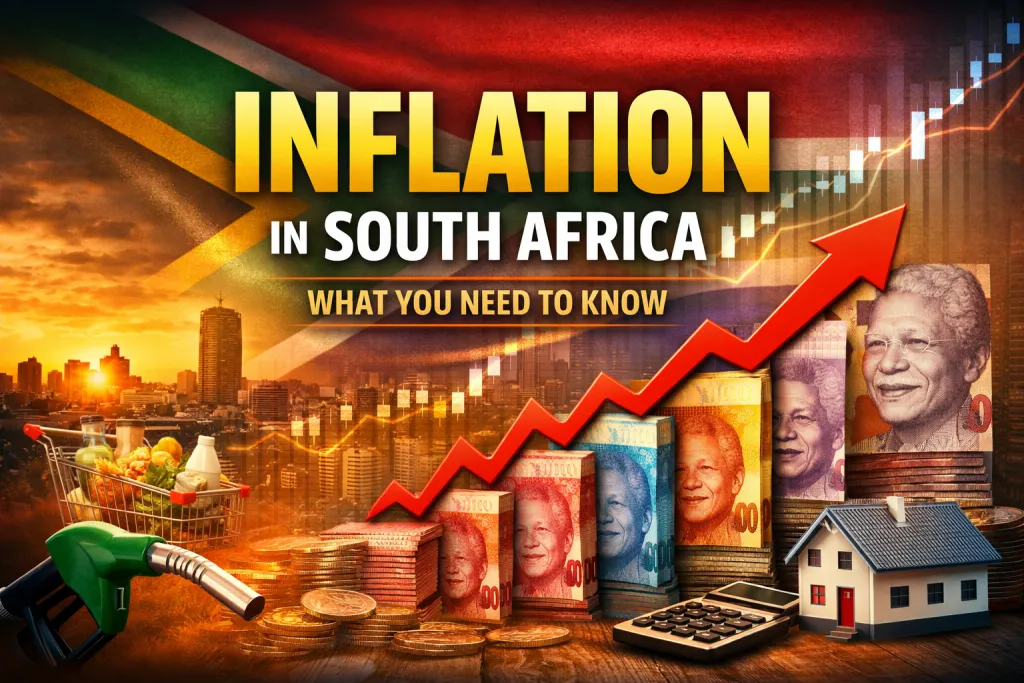
How the Inflation Rate Works in South Africa (Simple 2026 Guide)
How the Inflation Rate Works in South Africa (Simple Guide)
Inflation sounds complicated, but the idea is simple: it measures how fast prices go up over time. In South Africa, inflation affects everyday life, from groceries and fuel to rent, loan repayments, and business costs.
What Is Inflation?
Inflation is the rate at which the general price level of goods and services increases over time. In simple terms, when inflation is low, prices rise slowly. When inflation is high, prices rise faster.
For example, if inflation is 5%, something that costs R100 today may cost about R105 next year. That means your money buys a little less each year.
Who Measures Inflation in South Africa?
Inflation in South Africa is measured by Statistics South Africa, also known as Stats SA. The official measure is called the Consumer Price Index, or CPI.
Stats SA collects thousands of prices every month from shops and service providers across the country.
What Is the Consumer Price Index (CPI)?
The CPI is the official measure of inflation in South Africa. It tracks how prices change across a basket of goods and services that households commonly buy.
What Causes Inflation in South Africa?
Fuel prices
Fuel affects transport, food delivery, and logistics costs. When petrol prices rise, businesses often raise prices.
Food prices
Drought, transport costs, exchange rates, and global food prices can increase grocery costs.
Electricity costs
Electricity tariff increases raise business operating costs.
Exchange rate
A weaker rand makes imports more expensive.
Interest rates
Lower borrowing costs increase spending, while higher rates reduce spending.
How the South African Reserve Bank Controls Inflation
The South African Reserve Bank uses the repo rate to influence borrowing costs and keep inflation within its target range.
How Inflation Affects Your Debt Repayments
When inflation rises, the Reserve Bank may increase interest rates. This can increase the cost of:
- Home loan repayments
- Vehicle finance
- Credit card interest
- Personal loans
Useful Official Resources
Frequently Asked Questions
What is the inflation target in South Africa?
The SARB aims to keep inflation around 3% with a tolerance band of plus or minus 1 percentage point.
Does inflation increase my bond repayment?
Yes. Rising inflation can lead to higher interest rates, which can increase bond repayments.