Free South African Business Startup Checklist Tool

Follow this free checklist to make sure your business is legally registered and compliant in South Africa.
How to Start a Business in South Africa
Starting a business in South Africa involves several important steps to ensure your company is legally registered and compliant with government regulations. The process is relatively straightforward, but entrepreneurs must follow the correct order when registering their company, tax details, and other legal requirements.
In most cases, the first step is registering your business with the Companies and Intellectual Property Commission (CIPC). Once the company is registered, the South African Revenue Service (SARS) automatically generates an income tax reference number for the business.
Below are the key steps most entrepreneurs follow when starting a business in South Africa.
1. Choose Your Business Structure
The first step is deciding what type of business structure you want to register. The most common option is a Private Company (Pty) Ltd, which protects the personal assets of the owners by separating them from the business entity. Other options include partnerships, sole proprietorships, and non-profit companies depending on your business goals.
2. Reserve a Company Name
Before registering your company, you can reserve a unique business name through the CIPC. The name must not already exist in the CIPC database. If you prefer, the system can also assign a company registration number as your official company name.
3. Register Your Company with CIPC
Once your name is approved, the next step is submitting your company registration application. This includes details about the directors, company address, and the Memorandum of Incorporation (MOI), which outlines how the company will operate. After approval, the CIPC issues your official company registration number.
4. Register for Tax with SARS
After your company is registered, you must ensure your business is registered with SARS for tax purposes. Companies automatically receive an income tax number after registration, but you may also need to register for VAT, PAYE, or other taxes depending on your business activities.
5. Open a Business Bank Account
Opening a dedicated business bank account helps separate personal and company finances. Most banks require your company registration documents, director identification, and proof of address before opening the account.
6. Register for Additional Compliance (If Required)
Depending on your business activities and whether you employ staff, you may also need to register for:
- UIF (Unemployment Insurance Fund)
- COIDA (Compensation Fund)
- PAYE for employee taxes
- Business licences required by municipalities
Completing these registrations ensures your business operates legally and avoids penalties or compliance issues later.
Business Startup Checklist
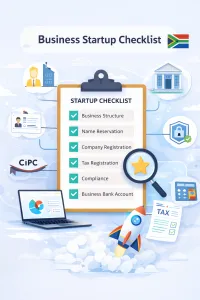
Free South African Business Startup Checklist
Track everything you need to legally start a business in South Africa.
Frequently Asked Questions
Do I need to register a company to start a business in South Africa?
In many cases, yes. Most entrepreneurs register a Private Company (Pty) Ltd through the Companies and Intellectual Property Commission (CIPC). However, some people operate as sole proprietors, which does not require company registration but still requires tax compliance with the South African Revenue Service (SARS).
How much does it cost to register a company in South Africa?
The official CIPC company registration fee typically starts from around R175 depending on whether a company name is reserved. Additional costs may apply if you use a professional service to handle the registration process.
Do I need to register for tax with SARS?
Yes. Once your company is registered with CIPC, SARS automatically creates an income tax reference number for the business. Companies must then manage their tax compliance through SARS eFiling and submit annual tax returns.
When do I need to register for VAT?
VAT registration becomes mandatory when your business turnover exceeds R1 million within a 12-month period. Businesses can also choose voluntary VAT registration if they meet certain conditions and expect to grow.
Do I need to register for UIF or PAYE?
If your business hires employees, you must register for PAYE (Pay As You Earn) tax and UIF (Unemployment Insurance Fund) to comply with South African labour and tax regulations. These registrations allow employers to deduct employee taxes and contribute to unemployment benefits.
What is COIDA registration?
COIDA (Compensation for Occupational Injuries and Diseases Act) registration is required for businesses that employ workers. It provides compensation for employees who are injured or become ill due to work-related activities.
How long does it take to register a company in South Africa?
Company registration can often be completed within a few days, depending on whether the application is submitted directly through CIPC or through a business registration service.
Can foreigners start a business in South Africa?
Yes. Foreign nationals can register companies in South Africa. However, they must comply with local regulations and may need a South African address or representative depending on the type of registration.