Follow these easy steps to register a private company on CIPC
Introduction
If you want to register a private company with CIPC, it’s easier to use the old eServices rather than the new eServices or Bizportal. The reason being that the new systems link to the department of home affairs to fetch the direcctor details, and the department of home affairs is mostly offline. Simply follow the steps below to register your company.
Quick answer: If you want to register a private company with CIPC, it's easier to use the old eServices rather than the new eServices or Bizportal. The If you would rather hand it over, Admin Boss assists with CIPC remotely, anywhere in South Africa.
Steps
Before you begin, you need to have R175 in your customer balance. The name reservation is R50 and the company registration is R125.
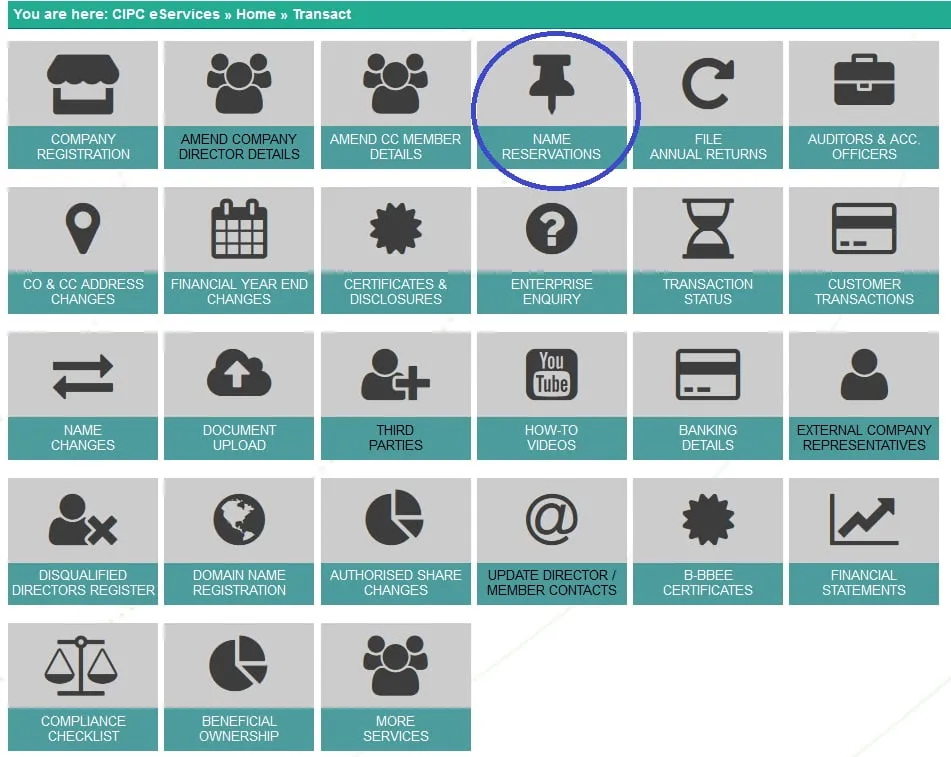
First you need to click on “name reservations”. On the next screen, you will be required to enter the proposed names for your company. It is wise to enter more than one names in order to save money, should the first one not be approved.
After the names are submitted, CIPC will test the names against their database to determine whether it is available. You will then receive an email, and if the name is approved, a document will be attached.

You then need to go back to eServices, and click on “company registration”.
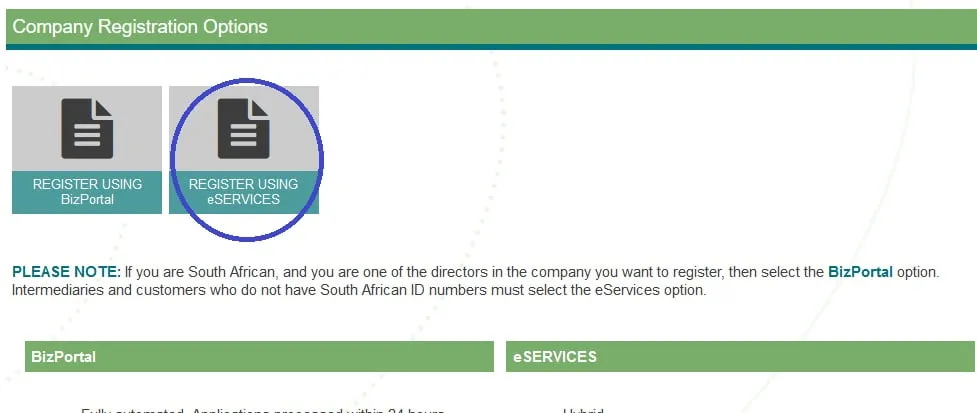
Next, click on “Register using eServices”.
On the next screen, the ID numbers for all the directors have to be added.
After clicking on next, you will be taken to a page where the details of each director has to be added. This includes the cellphone numbers, email addresses and physical addresses. The last question is whether the director is also an incorporator. At least one of the directors has to be an incoropator.
It is very important to add the correct details here, this will make future transactions on CIPC easier.
On the next screen, the company details have to be added. Here you also have to add the month of the financial year end and the amount of shares.
On the next screen, choose the option “Use a name that has already been apporved”. Then you need to enter the tracking number that’s indicated on the name reservation that was mailed to you.
After you have lodged the application, you just have to wait and keep an eye on your email. You will then receive an email with a document called COREG.
All the directors then have to sign this document.
The next step is very important.
The following files have to be scanned as one pdf file:
- COREG form
- Certified copies of all the directors’ ID documents
- Name reservation document that was received via email
Save the file and rename it using the tracking number indicated on the top of the COREG form.
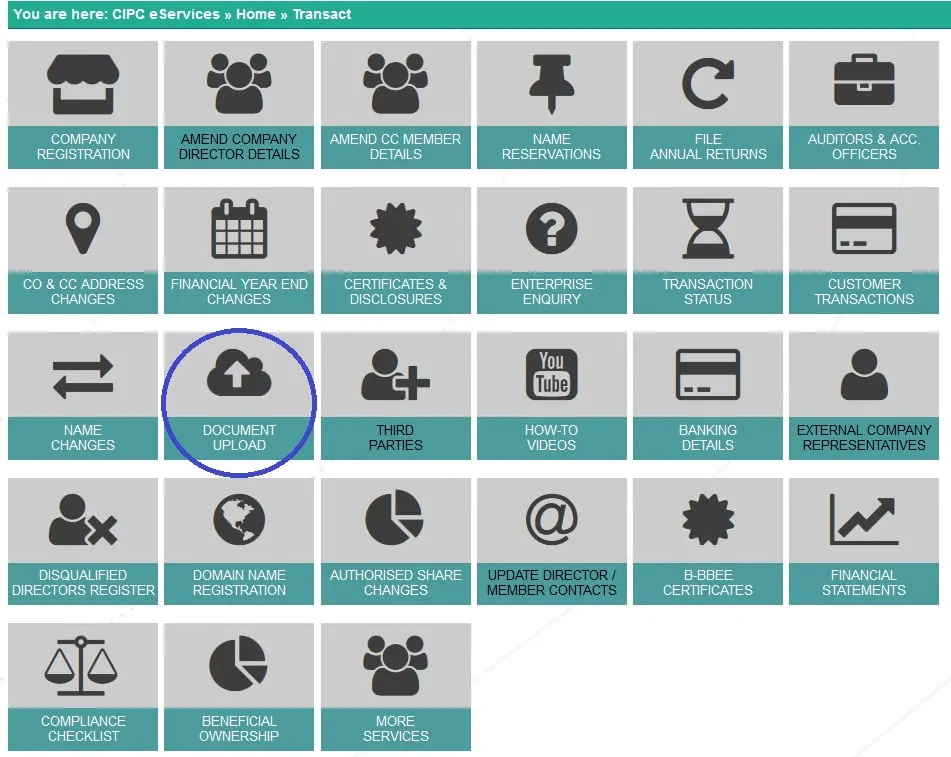
Go back to eServices, and choose the “Upload documents” option. Just enter the tracking number indicated on the COREG form and upload your documents.
CIPC will then register the company and email the COR15.1 form to you confirming that your company was successfully registered.
The company will also receive an email from SARS after registration with the income tax number of the company.
Contact us if you need more info.
Frequently Asked Questions
Who needs help with CIPC?
Any South African business owner, director, trustee or employer who must deal with CIPC. The guide above explains who it applies to and what is required.
Can Admin Boss assist with CIPC remotely?
Yes. Admin Boss works with clients across South Africa by email and online channels, so CIPC can be handled without visiting an office.
Where do I verify the official requirements for CIPC?
Always confirm current requirements on the official portals: gov.za, sars.gov.za and cipc.co.za. This page is reviewed against those sources.
Key Terms Explained
- CIPC: The Companies and Intellectual Property Commission, the government body that registers and regulates companies and close corporations in South Africa.
- SARS: The South African Revenue Service, responsible for collecting taxes and administering the tax Acts.
- Annual return: A yearly CIPC filing that confirms a company is still active; missing it leads to deregistration.
- Beneficial ownership: The record of the natural persons who ultimately own or control a company or trust, filed with CIPC or the Master of the High Court.
- Compliance: Staying up to date with every statutory filing, payment and record a business owes to CIPC, SARS and other regulators.
Last reviewed 1 November 2026 by Admin Boss against official sources: gov.za, SARS and CIPC.