How to Submit Beneficial Ownership for Trusts in South Africa (Complete Guide for 2026)
Trustees in South Africa are now legally required to submit beneficial ownership information for trusts. This requirement was introduced to improve transparency and help combat financial crimes such as money laundering and tax evasion.
If you manage a trust, it is important to understand what beneficial ownership means, where it must be submitted, and how to stay compliant. In this guide, we explain the process in simple terms so trustees can comply with the law quickly and correctly. ⚖️
What Is Beneficial Ownership in a Trust?
A beneficial owner is any natural person who ultimately benefits from or controls a trust.
In terms of South African legislation, beneficial owners of a trust typically include:
• The founder of the trust
• All trustees
• Named beneficiaries
• Any person who exercises effective control over the trust
Even if a legal entity is involved, the actual individuals behind that entity must still be disclosed as the beneficial owners.
The goal is to ensure authorities know who ultimately controls or benefits from the trust structure.
Why Beneficial Ownership Reporting Is Required
South Africa introduced stricter beneficial ownership reporting rules through amendments to the Trust Property Control Act and anti-money-laundering regulations.
Trustees must now record and submit beneficial ownership details to the Master of the High Court and ensure the information remains accurate and up to date.
This requirement helps:
✔ Prevent financial crime
✔ Improve transparency of trust structures
✔ Align South Africa with international anti-money-laundering standards
Where to Submit Beneficial Ownership for Trusts
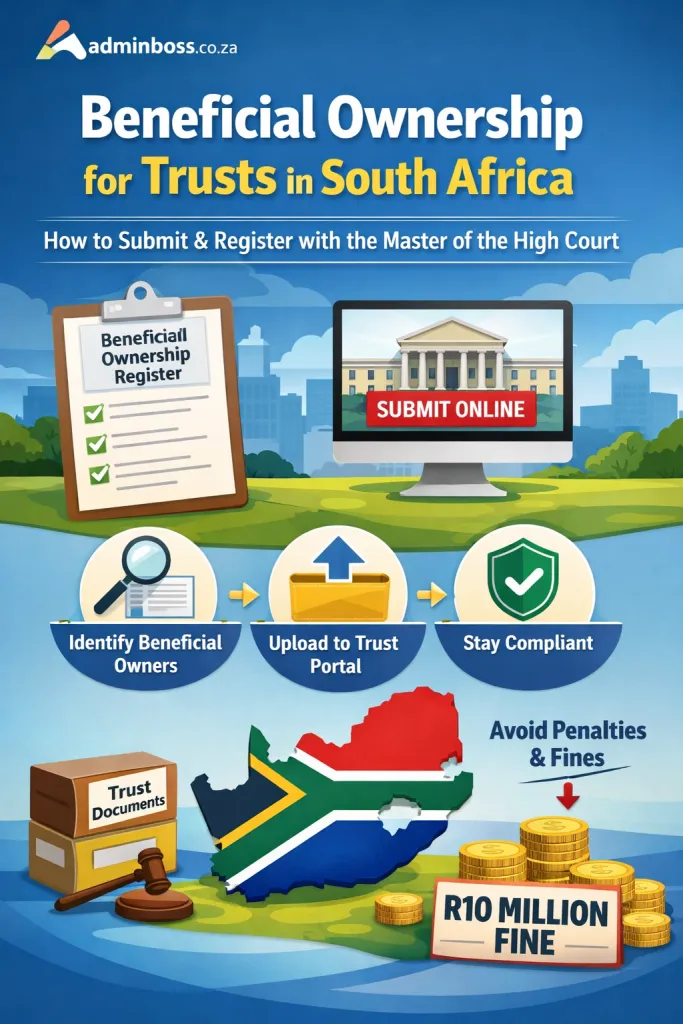
Beneficial ownership information for trusts must be submitted online to the Master of the High Court through the Trust Beneficial Ownership Register system.
The submission is done electronically via the Master’s Office online portal.
Important things to know:
• Submissions cannot be done manually at the Master’s Office
• The system requires uploading a completed Excel register
• The file must contain detailed information about each beneficial owner
• Trustees must keep supporting documents, including ID copies of beneficial owners
The online system ensures the Master of the High Court maintains an official database of trust ownership information.
How to Submit Beneficial Ownership for a Trust (Step-by-Step)
Here is a simplified overview of the submission process:
Step 1: Gather the Required Information
You will need details for every beneficial owner, including:
• Full names
• South African ID or passport number
• Residential address
• Nationality
• Role in the trust (founder, trustee, beneficiary etc.)
Step 2: Download the Beneficial Ownership Register Template
The Master’s Office provides an Excel template that must be completed with all beneficial owner information.
Step 3: Log into the Master’s Trust Portal
Visit the Master of the High Court Trust Portal and search for the trust using the trust registration number.
Example trust numbers:
• ITxxxxx/xxxx – Inter vivos trusts
• MTxxxxx/xxxx – Testamentary trusts
Step 4: Upload the Completed Register
Upload the completed Excel file to the Trust Beneficial Ownership Register section of the portal.
Step 5: Confirm Submission
Once successfully uploaded, the system records the information in the national trust beneficial ownership database.
When Must Beneficial Ownership Be Updated?
Trustees must ensure the information remains accurate and up to date.
Updates must be submitted whenever:
• A new trustee is appointed
• A beneficiary changes
• A trust amendment occurs
• A beneficial owner’s details change
Failing to update the register can lead to compliance issues.
Penalties for Non-Compliance
Trustees who fail to submit beneficial ownership information may face serious consequences.
Potential penalties include:
• Fines of up to R10 million
• Criminal liability
• Possible imprisonment of up to 5 years in severe cases.
Because of these risks, many trustees choose to work with professionals to ensure their trust records remain compliant.
How Admin Boss Can Help
Submitting beneficial ownership details can be confusing, especially if you are unfamiliar with the Master’s online system.
Admin Boss offers affordable and reliable compliance assistance for South African trusts, including:
✔ Beneficial ownership register preparation
✔ Trust compliance guidance
✔ Assistance with Master of the High Court submissions
✔ Updating trust records when changes occur
Our goal is to keep your trust compliant while saving you time and stress. 😊
Example Scenario: Submitting Beneficial Ownership for a Trust
To better understand how beneficial ownership reporting works, consider the following example.
Example
John creates the Smith Family Trust in South Africa to manage family assets.
The trust structure looks like this:
• Founder: John Smith
• Trustees: John Smith and Mary Smith
• Beneficiaries: Their two children, David and Sarah
Under the Trust Property Control Act, the trustees must identify all beneficial owners of the trust and record their details in the beneficial ownership register. These typically include the founder, trustees, and beneficiaries, as well as anyone who ultimately exercises control over the trust.
Step 1: Collect Beneficial Owner Information
The trustees must gather details for each beneficial owner, including:
• Full names
• ID or passport numbers
• Residential addresses
• Nationality
• Role in the trust (founder, trustee, beneficiary)
These details must be kept in a beneficial ownership register maintained by the trustees.
Step 2: Prepare the Beneficial Ownership Register
The trustees complete the beneficial ownership register template required by the Master of the High Court.
This register records:
• The identity of each beneficial owner
• The reason the person is considered a beneficial owner
• The date the person became a beneficial owner
Trustees are legally required to establish and maintain this register.
Step 3: Upload the Information to the Master’s Portal
The trustees then upload the completed beneficial ownership information to the Master of the High Court’s online trust register.
The law requires trustees to lodge the beneficial ownership register with the Master’s Office and keep the information updated whenever changes occur.
Step 4: Keep the Information Updated
If a new trustee is appointed or a beneficiary changes, the trustees must update the register and submit the revised information again.
Failing to comply with these obligations may lead to penalties of up to R10 million or imprisonment for trustees.
Conclusion
Beneficial ownership reporting is now a mandatory compliance requirement for all South African trusts.
Trustees must ensure that:
• All beneficial owners are properly identified
• Information is submitted to the Master of the High Court online system
• The register remains accurate and updated
By staying compliant, trustees protect the trust from legal risks, penalties, and regulatory issues.
If you need assistance with trust compliance or beneficial ownership submissions, Admin Boss is here to help.
Frequently Asked Questions About Beneficial Ownership for Trusts in South Africa
What is beneficial ownership in a trust?
Beneficial ownership in a trust refers to the natural persons who ultimately benefit from or control the trust. In South Africa this usually includes the founder, trustees, beneficiaries, and anyone who exercises effective control over the trust. Even if a legal entity is involved, the natural persons behind that entity must still be disclosed as beneficial owners.
Do trusts in South Africa have to submit beneficial ownership information?
Yes. Since amendments to the Trust Property Control Act, trustees are legally required to record and submit beneficial ownership information for their trust. The information must be maintained in a register and submitted to the Master of the High Court.
Where must beneficial ownership for trusts be submitted?
Beneficial ownership information must be submitted online to the Master of the High Court through the Trust Beneficial Ownership Register portal. The system allows trustees to upload an electronic register containing the details of all beneficial owners.
Who is responsible for submitting the beneficial ownership register?
The trustees of the trust are responsible for establishing, maintaining, and submitting the beneficial ownership register. However, trustees may authorize a trust administrator or service provider to submit the information on their behalf through a power of attorney.
What information must be included in the beneficial ownership register?
The beneficial ownership register usually requires the following information for each beneficial owner:
• Full name
• South African ID number or passport number
• Residential address
• Nationality
• The person’s role in the trust (founder, trustee, beneficiary or controller)
Trustees must also keep copies of identification documents for all beneficial owners.
Can beneficial ownership be submitted manually at the Master’s Office?
No. The Master of the High Court requires beneficial ownership information to be submitted electronically through the online portal. Manual or paper submissions are not accepted.
How often must the trust beneficial ownership register be updated?
The beneficial ownership register must be kept accurate and up to date. Whenever there is a change in trustees, beneficiaries, or other beneficial owners, the information must be updated on the Master’s online system within a reasonable time after the change occurs.
What are the penalties for not submitting beneficial ownership information?
Failure to comply with beneficial ownership reporting requirements can result in serious penalties, including fines of up to R10 million or imprisonment for up to five years for trustees who fail to submit or maintain accurate records.
Does submitting beneficial ownership information to SARS mean the trust is compliant?
No. Reporting beneficial ownership information to SARS does not replace the requirement to submit the information to the Master of the High Court. Trustees must still submit the register through the Master’s official portal.
Can Admin Boss help with beneficial ownership submissions for trusts?
Yes. AdminBoss can assist trustees with preparing the beneficial ownership register, compiling required information, and submitting the register to the Master of the High Court to ensure your trust remains compliant with South African regulations.
About the Author
Andre van Niekerk is a South African business compliance specialist and the founder of Admin Boss, a service focused on helping entrepreneurs and trustees navigate regulatory requirements in South Africa.
Andre has practical experience assisting clients with:
✔ Company registrations
✔ SARS registrations and compliance
✔ Trust administration support
✔ Beneficial ownership reporting
✔ General business regulatory requirements
Through Admin Boss, Andre focuses on affordable, reliable, and straightforward compliance solutions for individuals, small businesses, and trustees across South Africa.
His content aims to simplify complex legal and administrative processes so that business owners and trustees can understand their obligations and stay compliant with South African regulations.
📌 Areas of expertise
• Company registration in South Africa
• Trust compliance and administration
• SARS registrations and tax compliance
• Beneficial ownership reporting
• Business regulatory compliance