South Africa’s Small Businesses Cannot Thrive on Broken Basics 🚨💡💧
📑 Article Index
- ⚡ When electricity and water fail, small businesses pay first
- 💸 No power means higher costs, slower service, and lost income
- 💧 Water interruptions hurt more than people realise
- 🛒 The consumer feels it too
- 📈 Why entrepreneurs matter for South Africa’s economy
- 🔧 What needs to happen next
- 🇿🇦 Conclusion: South Africa’s future depends on strong small businesses
- ❓ Frequently Asked Questions
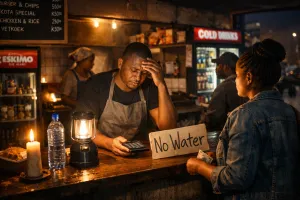
When electricity and water fail, small businesses pay first
Small businesses are the heartbeat of South Africa’s communities, but they are also the first to feel the pressure when basic services break down. Electricity outages disrupt production, damage equipment, and force businesses to spend more on off-grid solutions. Water shortages do the same by slowing operations, affecting hygiene, and interrupting service delivery. The OECD says South Africa’s electricity sector has caused significant economic damage, while also noting that water shortages can limit economic activity and reduce investment.
No power means higher costs, slower service, and lost income
For many entrepreneurs, a power cut is not a small inconvenience. It can stop sales, delay orders, spoil stock, and shorten trading hours. TIPS explains that load shedding disrupts production, makes it harder to keep supplying customers, damages machinery through sudden shutoffs and surges, and forces firms to pay for generators, solar, diesel, and other backup options.
This is especially hard on small businesses because they have less room to absorb shocks. The OECD reports that MSMEs employed 59% of South Africa’s workforce in 2022, showing how heavily the country depends on smaller firms to keep people working and earning. The same OECD report says outages have caused significant economic damage, and that the impact on households and businesses has been severe.
Water interruptions hurt more than people realise 💧
Water is not just a household issue. It affects restaurants, salons, laundries, food businesses, manufacturers, logistics firms, clinics, and spaza shops. Stats SA reports that more than one-third of South African households experienced dysfunctional water supply services in 2023. The government’s water and sanitation page also shows that interruptions remain widespread across parts of the country.
When water stops flowing, small businesses often have to buy tanked water, store extra water, change cleaning routines, or pause service altogether. That creates extra costs, delays, and a worse customer experience. The OECD warns that water supply shortages can reduce activity and investment, which means the damage is not just immediate — it weakens future growth too.
The consumer feels it too 🛒
When a small business pays more for fuel, generators, bottled water, repairs, and backup systems, those costs do not disappear. They are often reflected in higher prices, smaller portions, slower service, fewer trading hours, and less reliable stock availability. That means consumers pay more and receive less. TIPS notes that businesses face rising electricity costs and expensive off-grid solutions, which makes this pass-through pressure very real.
For consumers, the result is simple: higher costs, less convenience, and weaker trust in local service providers. For communities, it means fewer dependable local businesses and less money circulating close to home.
Why entrepreneurs and small businesses matter for South Africa’s economy 📈
South Africa does not grow only through big companies. It grows when thousands of entrepreneurs open shops, hire workers, buy stock, rent space, deliver services, and create local demand. Stats SA says the informal sector accounted for 19.5% of total employment in Q4 2024, while its data also shows that small businesses generated 21% of turnover in AFS 2023. The OECD adds that 59% of South Africa’s workforce was employed by MSMEs in 2022.
That matters because SMEs are the fastest way to spread opportunity. The OECD notes that South Africa’s National Development Plan expects most future jobs to come from new and expanding SMEs. The World Bank also says MSMEs can make a significant contribution to reducing unemployment.
What needs to happen next 🔧
If South Africa wants stronger growth, it must protect the businesses that create jobs. That means more reliable electricity, stronger municipal water systems, lower red tape, and better support for entrepreneurs who want to scale. The OECD says South Africa’s power system has improved somewhat, but it remains fragile, and water shortages still threaten growth.
Small businesses are not asking for special treatment. They are asking for the basics that let them trade, hire, serve customers, and grow. When electricity and water work, entrepreneurs work. When entrepreneurs work, communities earn. When communities earn, South Africa grows.
Frequently Asked Questions About Small Businesses and Service Failures in South Africa ❓
1. How do electricity outages affect small businesses in South Africa?
Electricity outages (load shedding) disrupt daily business operations, reduce productivity, and increase costs for small businesses. Many entrepreneurs must buy generators, solar systems, or diesel fuel to keep operating. Research shows power outages have reduced South Africa’s economic growth by about 1.5 percentage points in some years, demonstrating the serious economic impact of unreliable electricity.
2. Why are small businesses important for South Africa’s economy?
Small and medium-sized enterprises (SMEs) are essential to economic growth because they create jobs, support local communities, and drive innovation. Studies show that MSMEs employed about 59% of South Africa’s workforce in 2022, highlighting their role in employment and economic stability.
3. How do water shortages impact local businesses?
Water shortages can slow or completely stop operations in industries such as restaurants, laundries, food production, manufacturing, and retail. Businesses may need to purchase water tanks, trucked water, or storage systems to continue operating. These additional costs reduce profitability and can limit the ability of entrepreneurs to grow their businesses.
4. Why do electricity and water problems increase prices for consumers?
When businesses face higher operating costs from generators, water storage systems, damaged equipment, and lost productivity, those costs often get passed on to consumers. This can result in higher prices, slower service, and reduced availability of products in many local communities.
Conclusion: South Africa’s Future Depends on Strong Small Businesses 🇿🇦
South Africa cannot build a stronger economy while basic services remain unreliable. Electricity outages and water shortages do not only hurt businesses — they weaken communities, increase consumer prices, and slow national growth. Research shows that severe load shedding reduced South Africa’s economic growth by about 1.5 percentage points in 2023, highlighting how deeply infrastructure problems affect economic activity.
At the same time, small and medium-sized businesses are one of the country’s most powerful economic engines, employing around 59% of the workforce and providing livelihoods to millions of South Africans. When entrepreneurs can operate with reliable electricity and water, they hire workers, expand services, and strengthen local economies. When those basic services fail, innovation slows, businesses close, and consumers ultimately pay the price through higher costs and fewer opportunities.
If South Africa wants sustainable economic growth, job creation, and stronger communities, protecting and empowering small businesses must become a national priority. Reliable infrastructure is not a luxury — it is the foundation that allows entrepreneurs to build businesses, serve customers, and drive the country’s economic future forward. 💡📈