Complete Guide: Private Company Registration South Africa (2026) | Admin Boss
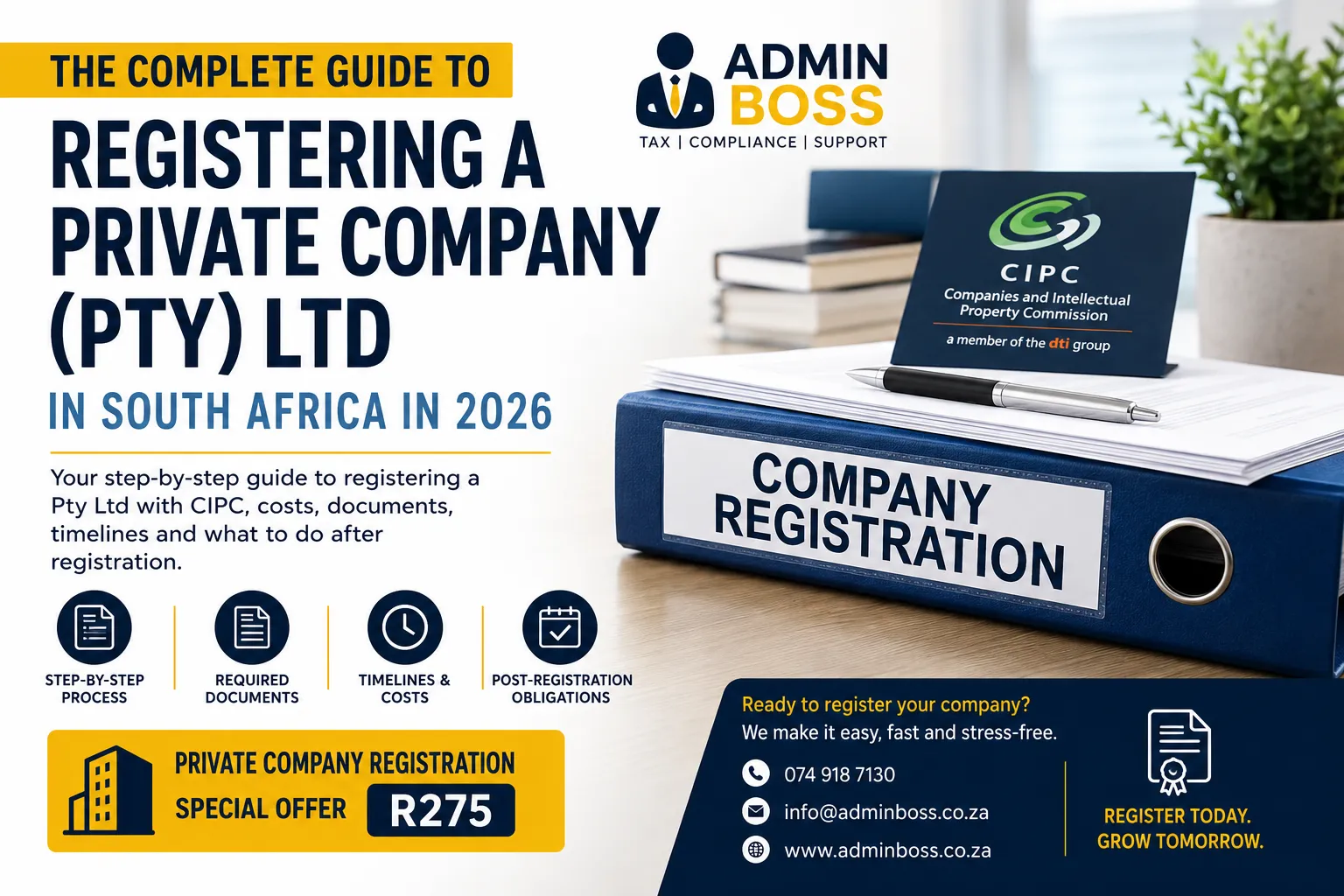
The Complete Guide to Registering a Private Company (Pty) Ltd in South Africa in 2026
To register a Private Company (Pty) Ltd in South Africa, reserve a company name, submit documents to CIPC and complete post-registration compliance requirements.
Required Documents
| Document | Purpose |
|---|---|
| ID Copy | Director verification |
| Residential Address | CIPC records |
| Company names | Name reservation |
| Director details | Registration setup |
Useful Services After Registration
After registering your company, there are still important compliance services you may need.
Appointment of Public Officer
Required for SARS access and tax compliance.
PAYE Registration
Register employees correctly.
UIF Registration
Required for employers.
COIDA Registration
Protect employees.
Beneficial Ownership
Keep records compliant.
CIPC Annual Returns
Avoid deregistration.
Frequently Asked Questions
Can I register without a company name?
Yes. A numbered company can be registered.
How long does registration take?
Usually one to five working days.
Need More Information?
Admin Boss helps entrepreneurs across South Africa register and stay compliant.
Visit Need More InfoOfficial Resources & Trusted Government Sources
Need to verify registration requirements, SARS compliance rules or business legislation? These official South African resources provide trusted information and updates.
Department of Employment and Labour
UIF, COIDA and employer compliance requirements.
Visit Department →South African Government
Access official legislation and government business guidance.
Visit Gov.za →Advanced Company Registration Guide: Everything Entrepreneurs Should Know
Registering a company in South Africa creates a formal legal structure that protects owners, improves business credibility and creates opportunities for growth. Company registration also helps entrepreneurs access banking facilities, funding opportunities, SARS registrations and long-term business expansion opportunities.
Many businesses start informally and only register later. However, registering early often creates stronger foundations and makes future growth easier. A registered company can operate under a formal identity and interact with institutions more effectively.
The Companies and Intellectual Property Commission (CIPC) operates under the Companies Act and handles company registrations and related records in South Africa. :contentReference[oaicite:0]{index=0}
Main Reasons Businesses Register Companies
- Improves trust and credibility
- Creates legal separation
- Supports business banking
- Allows funding opportunities
- Creates stronger brand identity
- Supports long-term expansion
- Allows formal staff employment
- Helps build business value
- Supports tax registrations
- Provides continuity beyond owners
Types Of Business Structures In South Africa
| Business Structure | Main Features | Liability | Growth Potential |
|---|---|---|---|
| Sole Proprietor | Owner and business operate together | Low | Moderate |
| Private Company (Pty) Ltd | Separate legal entity with shareholders | High | Very High |
| Partnership | Multiple owners share profits | Low | Moderate |
| Non-Profit Company | Mission-driven organisation structure | Moderate | Depends on model |
Planning Before Registration
Entrepreneurs should answer several questions before beginning registration:
- Who will own the company?
- How many directors are required?
- Will employees be hired?
- Will VAT registration be needed?
- Will investors participate later?
- Will the company apply for tenders?
- Will funding applications be required?
Choosing A Strong Company Name
Business names influence branding and future visibility. Strong names often share common characteristics.
- Easy to remember
- Easy to spell
- Relevant to the industry
- Flexible for future growth
- Avoid restricted wording
- Avoid confusing wording
Understanding Share Structures
Share structures determine ownership percentages and voting rights.
| Example | Ownership Structure |
|---|---|
| Solo Founder | 100% |
| Two Founders | 50% / 50% |
| Three Partners | Custom allocation |
| Investor Structure | Founder + investor percentages |
Director Responsibilities
Directors have important obligations.
- Financial oversight
- Business decision making
- Regulatory compliance
- Strategic planning
- Maintaining company records
- Protecting business interests
Common Registration Mistakes
- Incorrect ID information
- Wrong contact details
- Poor company name choices
- Incomplete forms
- Missing supporting documents
- Ignoring post-registration requirements
Post Registration Checklist
Registration is only the beginning. Businesses should also:
- Appoint a Public Officer
- Register UIF if staff are employed
- Register COIDA where necessary
- Open a business bank account
- Maintain financial records
- Submit annual returns
- Monitor compliance deadlines
Strong businesses usually grow through systems, planning and compliance. Registration creates a foundation that supports long-term growth and stronger business opportunities.
Still Have Questions About Company Registration?
Thousands of entrepreneurs delay registration, miss compliance requirements or discover problems after starting to trade. Getting the right information early can save time, money and unnecessary stress later.